Giuseppe Uncini

By 2 July 2019 Exhibited artists

GIUSEPPE UNCINI

GIUSEPPE UNCINI
Biography

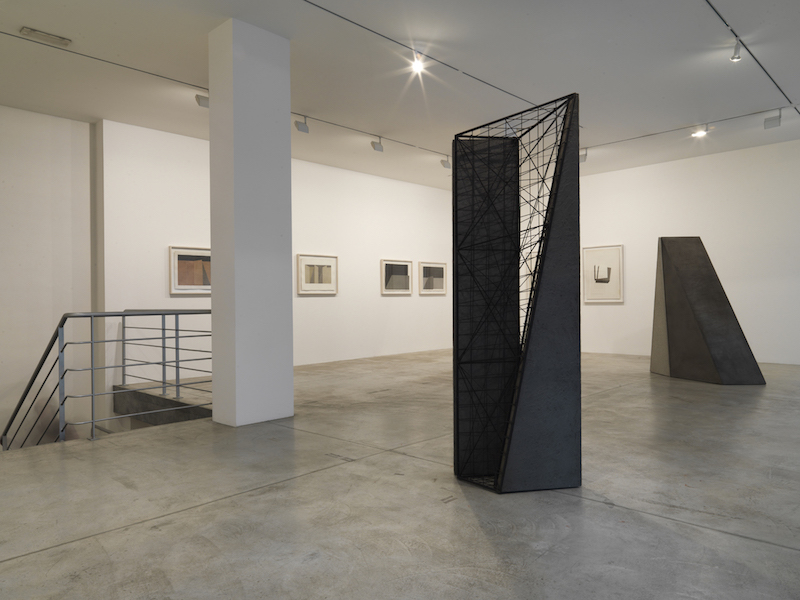
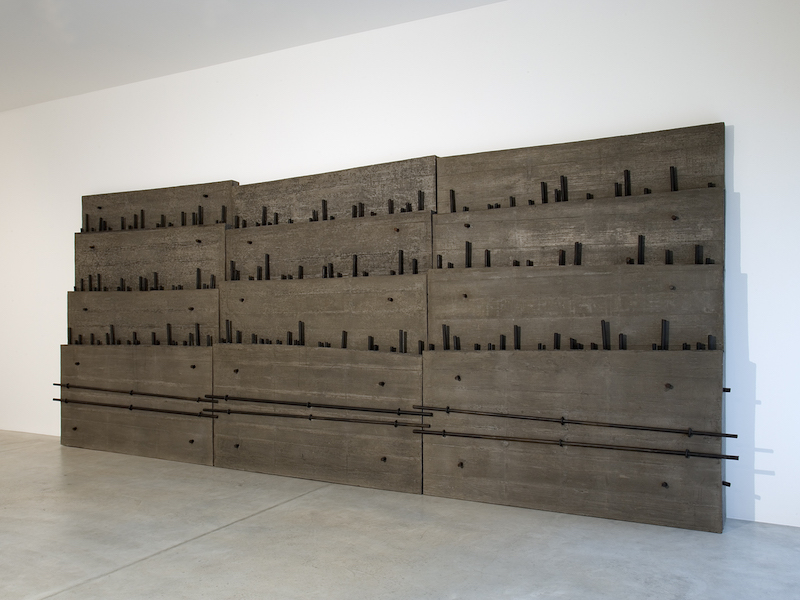
Giuseppe Uncini was born in Fabriano in 1929 and died in Trevi in ​​2008. In 1953 he moved to Rome where he got to know Edgardo Mannucci and made the acquaintance of Alberto Burri, Afro, Giuseppe Capogrossi, Ettore Colla, Emilio Villa. His first series of work date back to 1956 when he created the Terre, followed by the Cementarmati (1957-61), bodies of work made of iron, concrete and wire mesh, which reveal their supporting structure and constructive principle. During these years Giuseppe Uncini participated in various exhibitions with the “Giovane Scuola Romana” along with Tano Festa, Franco Angeli, Mario Schifano and Francesco Lo Savio. In 1962, together with Gastone Biggi, Nicola Carrino, Nato Frascà, Achille Pace and Pasquale Santoro, he founded Gruppo Uno which championed, through the use of new materials and the overcoming of the Informel, an art in favour of the perception and appreciation of the artist’s social role. Uncini’s research continued in the first half of the 1960s with Ferrocementi, followed by Strutturespazio, presented at the 33rd Venice Biennale in 1966. In the 1970s, the massive architectural presence of the series Mattoni confronted their own shadows that took on a solid form. His reflections on shadows and the possibility of making them physically perceptible continued in the subsequent bodies of work Ombre, Dimore and Muri d’ombra. Between the 1990s and the early 2000s, Uncini was attracted by the desire to render the empty spaces into sculptures, as demonstrated by Spazi di Ferro, followed by Spazicemento.

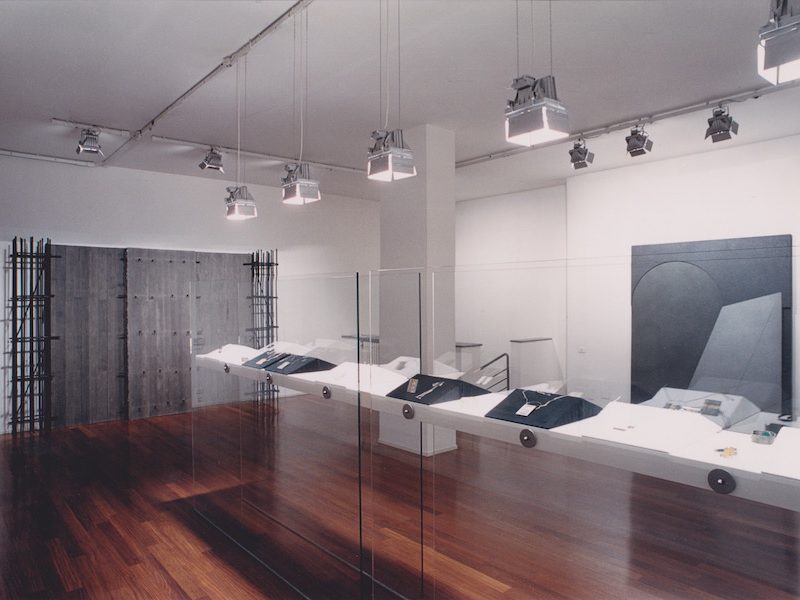
In the 2000s his sculptures took on monumental dimensions and architectural features with the series Architetture, up until the last years of his life when he worked on the series Artifici. With the latter he seemed to return to two-dimensionality and the use of earth as a creative medium once again. In the same period (early 2000s), he developed as a goldsmith, experimenting with the ancient technique of lost-wax casting. The last monumental work he created was Epistylium (2007-2009), a reinforced concrete sculpture over six meters high, created for the outdoor exhibition space of the Mart in Rovereto. During his long career, Giuseppe Uncini has been invited to exhibit his work at numerous venues around the world. Among his solo shows in institutions: MACTE, Termoli and GNAM, Rome (2019), Chiesa di San Matteo, Lucca (2016), Fondazione Marconi, Milan (2015), Musma, Matera (2013), Istituto statale d’arte, Rome (2010), Neue Galerie am Landesmuseum Joanneum, Graz and Accademia di San Luca, Rome (2009), ZKM – Museum fur Neue Kunst, Karlsruhe and MART, Rovereto (2008), Städtische Kunsthalle, Mannheim (2001), Palazzo Fabroni, Pistoia (2000), Centro Arti Visive – Ex Pescheria, Pesaro (1999), Galleria Civica d’Arte Contemporanea, Marsala (1990), Istituto d’Arte, Ferrara (1985), Pinacoteca e Musei Comunali, Macerata (1993). Noteworthy are also his participations in the Rome Quadriennale (1999, 1992, 1973, 1965, 1955), the Venice Biennale (1995, 1984, 1978, 1976, 1966), and the Tokyo Biennale (1963).

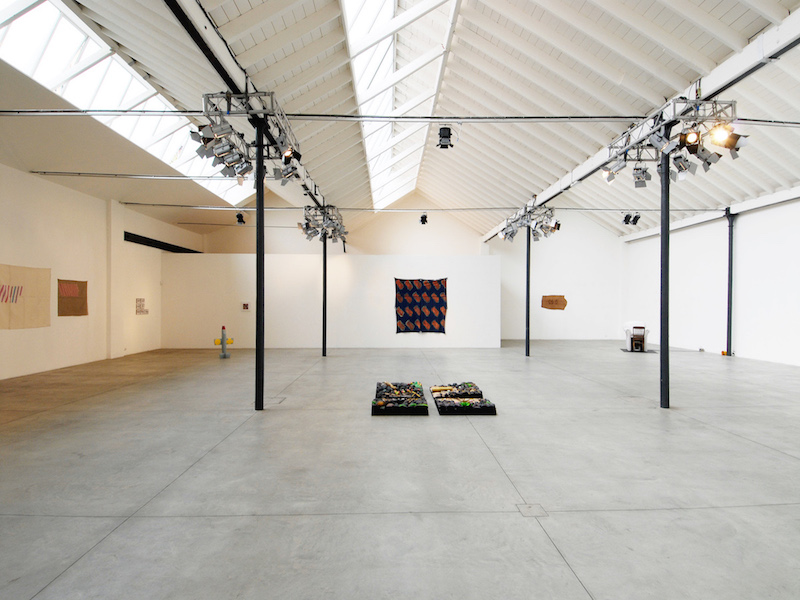
His collaboration with Galleria Fumagalli began in 1995 with the first solo exhibition accompanied by a text by Giovanni Maria Accame, who also edited the monograph published by DeAgostini in 1996 (in collaboration with Galleria Fumagalli). In the same year, the gallery served as an editor for the catalog with text by Marco Meneguzzo, “Giuseppe Uncini. Oeuvres 1959/1996”, which accompanied the exhibition at Studio Simonis and Galerie Vivas in Paris. In 1997 the gallery dedicated a second solo show to Uncini and in 2000 edited a volume with texts by Annamaria Maggi and Marco Meneguzzo for the exhibition at the Centro Arti Visive – ex Peschiera in Pesaro. A monograph that accompanied the exhibition at Palazzo Fabroni in Pistoia, curated by Bruno Corà was issued in the same year. In 2001, for the exhibition at the Städtische Kunsthalle in Mannheim, in collaboration with galleries Christian Stein and Giò Marconi in Milan, Galleria Fumagalli edited a volume with texts by Manfred Fath, Volker Feirabend and Marco Meneguzzo. In 2002, for his third solo show, Uncini presented a jewelry exhibition with a text by Ada Masoero (catalog “A cera persa”). The fourth solo show took place in 2007 and in 2008 the catalog raisonné edited by Bruno Corà and Annamaria Maggi was published by Silvana Editoriale. Lastly, in 2010 the gallery dedicated a fifth solo to Uncini, accompanied by the catalog “Il cemento disegnato. Works on paper 1957/2006” with texts by Franco Fanelli and Giacinto di Pietrantonio. In 2021 Uncini’s oeuvre is part of the exhibition program MY30YEARS – Coherency in Diversity, curated by Lóránd Hegyi, which celebrates Annamaria Maggi’s 30-year-long career at the head of the gallery. The first exhibition, Architettura – Spazialità – Artefatto, puts his works in context with those by Anne & Patrick Poirier and Marco Tirelli.

View curriculum →

Biography

Giuseppe Uncini was born in Fabriano in 1929 and died in Trevi in ​​2008. In 1953 he moved to Rome where he got to know Edgardo Mannucci and made the acquaintance of Alberto Burri, Afro, Giuseppe Capogrossi, Ettore Colla, Emilio Villa. His first series of work date back to 1956 when he created the Terre, followed by the Cementarmati (1957-61), bodies of work made of iron, concrete and wire mesh, which reveal their supporting structure and constructive principle. During these years Giuseppe Uncini participated in various exhibitions with the “Giovane Scuola Romana” along with Tano Festa, Franco Angeli, Mario Schifano and Francesco Lo Savio. In 1962, together with Gastone Biggi, Nicola Carrino, Nato Frascà, Achille Pace and Pasquale Santoro, he founded Gruppo Uno which championed, through the use of new materials and the overcoming of the Informel, an art in favour of the perception and appreciation of the artist’s social role. Uncini’s research continued in the first half of the 1960s with Ferrocementi, followed by Strutturespazio, presented at the 33rd Venice Biennale in 1966. In the 1970s, the massive architectural presence of the series Mattoni confronted their own shadows that took on a solid form. His reflections on shadows and the possibility of making them physically perceptible continued in the subsequent bodies of work Ombre, Dimore and Muri d’ombra. Between the 1990s and the early 2000s, Uncini was attracted by the desire to render the empty spaces into sculptures, as demonstrated by Spazi di Ferro, followed by Spazicemento.

In the 2000s his sculptures took on monumental dimensions and architectural features with the series Architetture, up until the last years of his life when he worked on the series Artifici. With the latter he seemed to return to two-dimensionality and the use of earth as a creative medium once again. In the same period (early 2000s), he developed as a goldsmith, experimenting with the ancient technique of lost-wax casting. The last monumental work he created was Epistylium (2007-2009), a reinforced concrete sculpture over six meters high, created for the outdoor exhibition space of the Mart in Rovereto. During his long career, Giuseppe Uncini has been invited to exhibit his work at numerous venues around the world. Among his solo shows in institutions: MACTE, Termoli and GNAM, Rome (2019), Chiesa di San Matteo, Lucca (2016), Fondazione Marconi, Milan (2015), Musma, Matera (2013), Istituto statale d’arte, Rome (2010), Neue Galerie am Landesmuseum Joanneum, Graz and Accademia di San Luca, Rome (2009), ZKM – Museum fur Neue Kunst, Karlsruhe and MART, Rovereto (2008), Städtische Kunsthalle, Mannheim (2001), Palazzo Fabroni, Pistoia (2000), Centro Arti Visive – Ex Pescheria, Pesaro (1999), Galleria Civica d’Arte Contemporanea, Marsala (1990), Istituto d’Arte, Ferrara (1985), Pinacoteca e Musei Comunali, Macerata (1993). Noteworthy are also his participations in the Rome Quadriennale (1999, 1992, 1973, 1965, 1955), the Venice Biennale (1995, 1984, 1978, 1976, 1966), and the Tokyo Biennale (1963).

His collaboration with Galleria Fumagalli began in 1995 with the first solo exhibition accompanied by a text by Giovanni Maria Accame, who also edited the monograph published by DeAgostini in 1996 (in collaboration with Galleria Fumagalli). In the same year, the gallery served as an editor for the catalog with text by Marco Meneguzzo, “Giuseppe Uncini. Oeuvres 1959/1996”, which accompanied the exhibition at Studio Simonis and Galerie Vivas in Paris. In 1997 the gallery dedicated a second solo show to Uncini and in 2000 edited a volume with texts by Annamaria Maggi and Marco Meneguzzo for the exhibition at the Centro Arti Visive – ex Peschiera in Pesaro. A monograph that accompanied the exhibition at Palazzo Fabroni in Pistoia, curated by Bruno Corà was issued in the same year. In 2001, for the exhibition at the Städtische Kunsthalle in Mannheim, in collaboration with galleries Christian Stein and Giò Marconi in Milan, Galleria Fumagalli edited a volume with texts by Manfred Fath, Volker Feirabend and Marco Meneguzzo. In 2002, for his third solo show, Uncini presented a jewelry exhibition with a text by Ada Masoero (catalog “A cera persa”). The fourth solo show took place in 2007 and in 2008 the catalog raisonné edited by Bruno Corà and Annamaria Maggi was published by Silvana Editoriale. Lastly, in 2010 the gallery dedicated a fifth solo to Uncini, accompanied by the catalog “Il cemento disegnato. Works on paper 1957/2006” with texts by Franco Fanelli and Giacinto di Pietrantonio. In 2021 Uncini’s oeuvre is part of the exhibition program MY30YEARS – Coherency in Diversity, curated by Lóránd Hegyi, which celebrates Annamaria Maggi’s 30-year-long career at the head of the gallery. The first exhibition, Architettura – Spazialità – Artefatto, puts his works in context with those by Anne & Patrick Poirier and Marco Tirelli.

View curriculum →

Works

Giuseppe Uncini, Cementarmato, 1961. Cemento e ferro, 139x89 cm
Giuseppe Uncini, Cementarmato, 1961
Iron and cement, 139x89 cm
Giuseppe Uncini, Parete concava, 1971 copia
Giuseppe Uncini, Parete concava, 1971
Wood, bricks, cement, 215x125x15 cm
Copyright 2020 Armellin F.
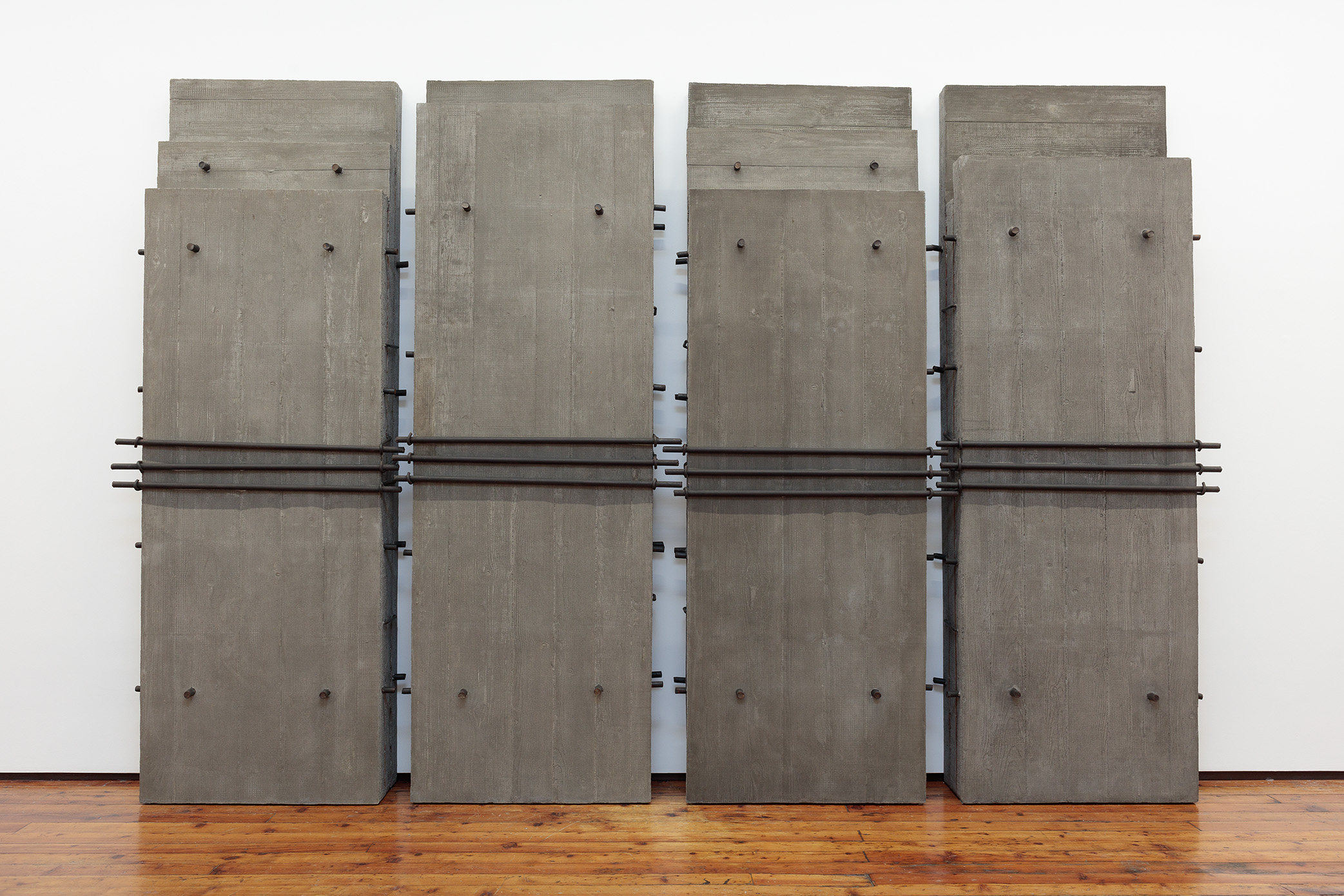
Giuseppe Uncini, Architetture n.202, 2005
Cement and iron, 270x410x32 cm
Giuseppe Uncini, Senza titolo, 1996. Pennarello e acquarello su carta, 100x70 cm
Giuseppe Uncini, Untitled, 1996
Marker and watercolor on paper, 100x70 cm
Copyright 2020 Armellin F.
Giuseppe Uncini, Spazicemento, 2000
Marker, watercolor on paper mounted on canvas, 248x138x3 cm
Copyright 2020 Armellin F.
Giuseppe Uncini, Untitled, 2004
Mixed media on cardboard, 37,5x37,5x2 cm

Works

Giuseppe Uncini, Cementarmato, 1961. Iron and cement, 139x89 cm

Giuseppe Uncini, Cementarmato, 1961. Iron and cement, 139x89 cm

Giuseppe Uncini, Parete concava, 1971. Wood, bricks, cement, 215x125x15 cm

Giuseppe Uncini, Parete concava, 1971. Wood, bricks, cement, 215x125x15 cm

Giuseppe Uncini, Architetture n.202, 2005. Cement and iron, 270x410x32 cm

Giuseppe Uncini, Architetture n.202, 2005. Cement and iron, 270x410x32 cm

Giuseppe Uncini, Untitled, 1996. Marker and watercolor on paper, 100x70 cm

Giuseppe Uncini, Untitled, 1996. Marker and watercolor on paper, 100x70 cm

Giuseppe Uncini, Spazicemento, 2000. Marker, watercolor on paper mounted on canvas, 248x138x3 cm

Giuseppe Uncini, Spazicemento, 2000. Marker, watercolor on paper mounted on canvas, 248x138x3 cm

Giuseppe Uncini, Untitled, 2004. Mixed media on cardboard, 37,5x37,5x2 cm

Giuseppe Uncini, Untitled, 2004. Mixed media on cardboard, 37,5x37,5x2 cm

Exhibitions

SOLO EXHIBITIONS

GIUSEPPE UNCINI

Opening 3 March 2007
6 March to 4 April 2007

Exhibition  →

GIUSEPPE UNCINI

Opening 3 March 2007
6 March to 4 April 2007

Exhibition  →

GIUSEPPE UNCINI
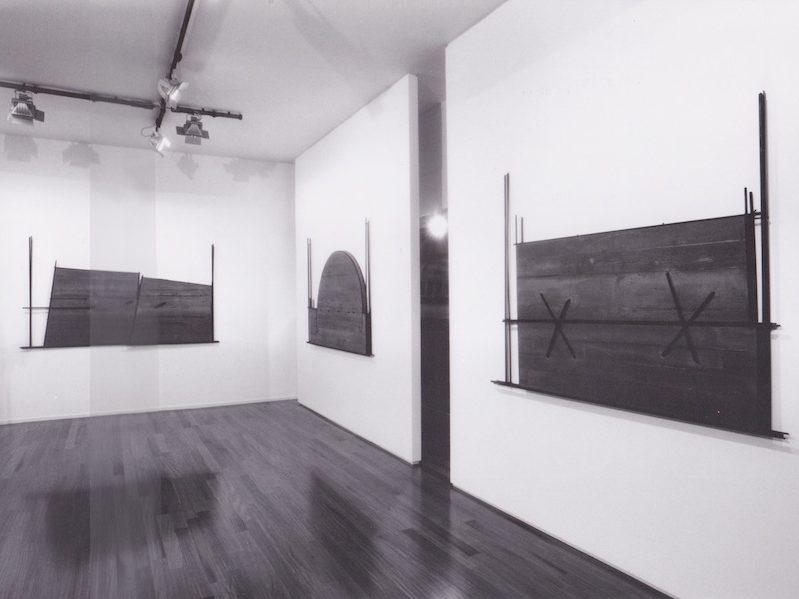
A cera persa

Opening 7 December 2002
10 December 2002 to 5 February 2003
Exhibition  →

GIUSEPPE UNCINI
Opere 1958/1996

1997

Exhibition  →

GIUSEPPE UNCINI
Gli Spazicemento

1995

Exhibition  →

GROUP EXHIBITIONS

Ambiguity of the Objects

Opening 19 May, 2022
20 May to 29 July, 2022

Exhibition  →

Architettura – Spazialità – Artefatto

Opening 26 May 2021
26 May to 30 July 2021

Exhibition  →

Switch On

Opening 4 October 2012
5 October to 15 November 2012

Exhibition  →

Visioni. 20 artisti a Sant’Agostino

Opening 8 April 2005
9 April to 11 June 2005

Exhibition  →

AAVV:30

Opening 27 November 2004
30 November 2004 to 20 January 2005

Exhibition  →

Uscita di sicurezza

October 1996

Exhibition  →

Exhibitions

SOLO EXHIBITIONS

GIUSEPPE UNCINI

Opening 3 March 2007
6 March to 4 April 2007

Exhibition  →

GIUSEPPE UNCINI

Opening 3 March 2007
6 March to 4 April 2007

Exhibition  →

GIUSEPPE UNCINI
A cera persa

Opening 7 December 2002
10 December 2002 to 5 February 2003

Exhibition  →

GIUSEPPE UNCINI
Opere 1958/1996

1997

Exhibition  →

GIUSEPPE UNCINI
Gli Spazicemento

1995

Exhibition  →

GROUP EXHIBITIONS

Ambiguity of the Objects

Opening 19 May, 2022
20 May to 29 July, 2022

Exhibition  →

Architettura – Spazialità – Artefatto

Opening 26 May 2021
26 May to 30 July 2021

Exhibition  →

Switch On

Opening 4 October 2012
5 October to 15 November 2012

Exhibition  →

Visioni. 20 artisti a Sant’Agostino

Opening 8 April 2005
9 April to 11 June 2005

Exhibition  →

AAVV:30

Opening 27 November 2004
30 November 2004 to 20 January 2005

Exhibition  →

Uscita di sicurezza

October 1996

Exhibition  →

JOIN OUR MAILING LIST

Join the discussion 11 Comments

  • In der Spielbank in Bremerhaven fehlt das große Spiel und es handelt sich hier um ein reines Automatencasino.
    In der Spielbank in Bremen können Besucher zum
    Beispiel an einem der fünf American-Roulette-Tische
    Platz nehmen. In der Spielbank Bremerhaven wartet dagegen ausschließlich Automatenspiel auf Besucher.
    Die Spielbank Bremen befindet sich in einem sehr schönen historischen Gebäude direkt an der Weser.

    Täglich ab 19.00 Uhr stehen für das Pokerspiel drei Cash Game Tische sowie ein Tisch für die Variante Ultimate Texas Hold’em zur Verfügung.

    Beim Pokerspiel setzen die Spieler, sie gehen mit,
    erhöhen, setzen aus und legen ab. Das strategische Kartenspiel Poker wird von den Spielern in verschiedenen Varianten gespielt.

    Das Casino Bremerhaven liegt idyllisch direkt an der Nordsee und ist
    von Bremen aus in etwas mehr als einer halben Stunde per
    Auto oder Zug zu erreichen. Auch in Bremerhaven, der zweiten Stadt des Bundeslandes
    Bremen, befindet sich mit dem Casino Bremerhaven eine staatliche
    Spielbank, die von Westspiel betrieben wird. Auf Anfrage können sich Gäste auch individuelle
    Gruppenangebote erstellen lassen oder eine private Pokerrunde in professioneller und legerer Umgebung buchen. Da die
    Fläche dieser Spielothek in Bremen eher beschränkt ist, gibt
    es kein vollwertiges Restaurantangebot.

    References:
    https://online-spielhallen.de/zet-casino-aktionscode-dein-weg-zu-extrabelohnungen/

  • Bonusgeld wurde nicht angerüht. Ich habe für das Restguthaben dann den Einsatz um einiges erhöht und einen fetten 20k+ Gewinn gemacht (bonus
    war schon abgebrochen). Ich habe dann 2k zur Auszahlung
    beantrag und das Bonusgeld abgebrochen, welchen ich bisher nicht
    benutzt habe! 3k wurde einfach von meinen Konto gelöscht.
    Fans von Slots und klassischen Casino Titeln können hier von einer breiten Auswahl an Spielen, einem exzellenten Kundensupport und schnellen wie sicheren Transaktionsmöglichkeiten profitieren. In puncto Kundenservice bietet das Happy Hugo Casino einige Optionen, darunter E-Mail, Live-Chat
    und ein Ticketsystem. Um eine Auszahlung vorzunehmen, gehen Sie
    einfach auf die Seite “Kasse” oder “Banking” und wählen Sie die
    Auszahlungsoption. Ferner ist dies aber
    hier auch eines der besten Echtgeld Casinos, das man unter aktuellen Online
    Casinos Deutschlands vorfinden kann. Jedes Level bietet, wie
    wir gesehen haben, eine Vielzahl von Belohnungen, wie z.B.
    Bei einem Willkommensbonus müssen Sie sich zum ersten Mal anmelden und eine erste Einzahlung tätigen.
    Es geht darum während dem Aktionszeitraum bestimmte Slots zu spielen und dadurch in einer Rangliste aufzusteigen.
    Im Happy Hugo Casino kommen Turnierspieler auf ihre Kosten, denn
    hier ist die Aktion los. Gewinne aus Freispielen müssen 1 Mal umgesetzt
    werden und haben ein Gewinnlimit von 50€.

    References:
    https://online-spielhallen.de/top-9-online-casinos-in-deutschland-2025-testsieger-boni/

  • Here we have made a list of the currency names you would need to write spellings in order
    to deposit money against your currency cheques, DD, loan payments or more.

    Prime factors of a number are the prime numbers that multiply together to form that number.
    Like all numbers, it has a distinctive mathematical structure.

    Discover the secrets of 999,999,999,999,999,999,999 with our full breakdown of its
    prime factors, divisors, and mathematical properties… This visualization shows the relative proportions of its
    7 prime factors (outer circle), plus the
    relationship between these and its 256 divisors. You could say that a
    number is made or ‘composed’ of its prime factors. Its factors, divisors,
    and base properties can show some interesting behavior.

    What makes 999,999,999,999,999,999,999 an interesting number from a mathematical point
    of view? Just find the currency and get spelling for
    it. By using this site you accept our terms and conditions including our privacy and cookie,
    copyright and permissions policies. Every whole number greater than 1 is formed from at least one prime factor.
    Below you’ll find its key properties, along with some statistical info, fun facts
    and trivia.

    References:
    https://blackcoin.co/are-online-casino-vip-programs-worth-it/

  • He blends his teaching experience with digital tools to make learning accessible to a global audience.
    Important is a useful word, but it is broad. When you match the synonym to the reason, your English
    sounds clearer. Use serious when you want to show gravity or risk, and important when you want to show value or priority.

    Words that can be used instead of ‘key’ and ‘important’ include significant, critical, essential, vital, fundamental, and pivotal.

    Some of these words are absolute synonyms, meaning they
    have the exact same meaning as “important.” Other words are near synonyms,
    meaning they are similar in meaning but not identical. The word
    “important” suggests a degree of significance, whereas “crucial” implies something that is absolutely necessary or critical.
    Understanding the nuances of these synonyms can help writers and
    speakers convey significance and relevance
    with precision and impact. In this article, we will explore a
    variety of synonyms for the word “important” and how
    they can be used to enhance communication and expression.
    Some words are close to important but not exactly
    the same. These fit turning points and major happenings.
    These fit life, survival, and wellbeing.

    References:
    https://blackcoin.co/27_best-high-roller-bonus-casinos-2022_rewrite_1/

  • BK9AUD says:

    RollXO demonstrates commitment to responsible gambling through comprehensive player protection tools and resources.
    The platform implements responsible gambling measures including
    deposit limits, session controls, and self-exclusion options.

    The casino maintains strict verification procedures for withdrawals to prevent fraud and ensure account security.

    If you’re asking whether Rollxo online casino is legit – the experience answers that fast.
    You’ll find deposit limits, session timers, self-exclusion tools, and reality checks all
    inside your Rollxo Casino account settings. The installation is quick, and the app gives
    you direct access to the full game library, deposit
    options, live chat, and promo section. No deposit bonuses and winnings from free spins have a max withdrawal cap of AU$75.

    The minimum deposit to activate most offers is AU$30. Free spins must be used within 3 days,
    and deposit bonuses expire after 7.
    This “no-download” model saves precious storage space on your device and
    ensures you always have access to the latest version of the casino without needing updates.
    Instead of requiring a downloadable app, the entire platform
    functions as a Progressive Web App (PWA). The exceptional quality
    and variety of the game library at RollXO Australia is thanks to its partnerships with a
    long list of premier software providers. You’ll find everything from classic 3-reel
    fruit machines to advanced video slots packed with features like cascading reels, expanding wilds, and
    interactive bonus rounds.

    References:
    https://blackcoin.co/casino-site-reviews-2025/

  • casino mit paypal einzahlung

    References:
    qalmsecurity.nl

  • paypal casino sites

    References:
    acheemprego.com.br

  • casino sites that accept paypal

    References:
    starlikekorea.com

Leave a Reply