
A PERSONAL VIEW OF ABSTRACT PAINTING AND SCULPTURE
ENRICO CASTELLANI, ROBERT MANGOLD, ROBERT MORRIS, KENNETH NOLAND
26 May to 10 September 2016
A PERSONAL VIEW OF ABSTRACT PAINTING AND SCULPTURE
ENRICO CASTELLANI, ROBERT MANGOLD, ROBERT MORRIS, KENNETH NOLAND
26 May to 10 September 2016
Text
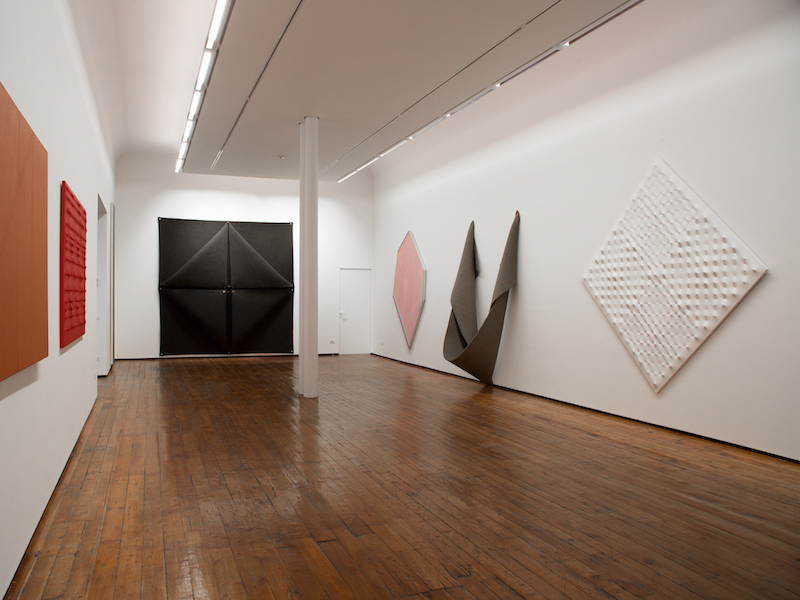
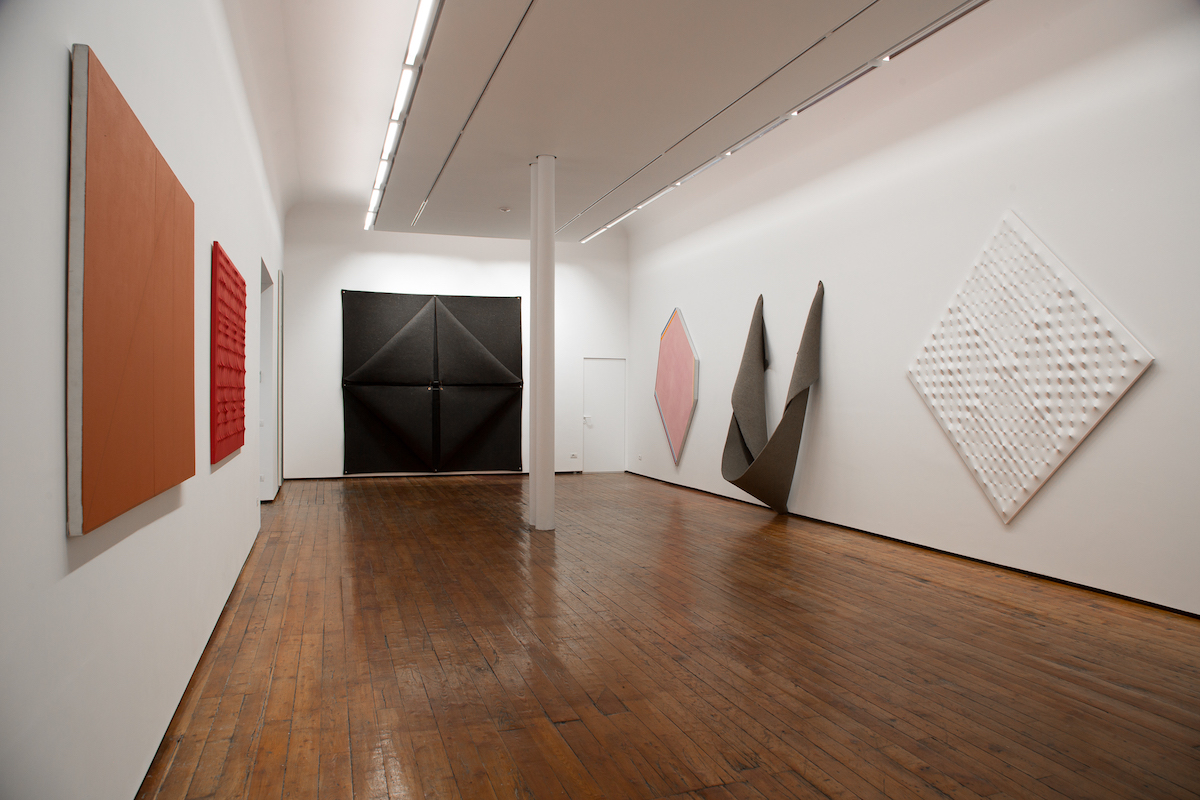
Galleria Fumagalli presents the exhibition “Enrico Castellani, Robert Mangold, Robert Morris, Kenneth Noland. A personal view of Abstract painting and sculpture”, curated by Hayden Dunbar, inaugurating the newly opened spaces in Milan. The exhibition features the work of four artists, fundamental to the post-war art – Enrico Castellani (1930, Castelmassa), Robert Mangold (1937, North Tonwanda, US), Robert Morris (1931, Kansas City, US) and Kenneth Noland (1924- 2010, Asheville, US) – whose characteristics, languages and results are extremely varied, nevertheless united by a same interest in abstract expressionism leading to new forms of radicals abstraction. Enrico Castellani, Robert Mangold, Robert Morris, Kenneth Noland. A personal view of Abstract painting and sculpture offers a glimpse of abstract artistic experiences of the 60s and 80s. Although their researches are different, there are many points of contact in the poetics of the exhibited artists. An example is the use of geometric forms, sometimes irregular. Castellani uses them with the Baldacchini in the ’60s and later with the eversion of the geometrical scheme and by rotating more works in sequence; Noland does it with the Shaped Canvas or Irregular Shaped in which the same shape of the frame assumes a geometric form in accordance with its inner geometry; Robert Morris declines irregular geometric shapes in the Felt of the 70s/80s, in which large portions of material are composed or cut; Robert Mangold uses geometric patterns deconstructed, asymmetric, innervated by graphite lines and unusual shapes.
It is also possible to find similarities in the use of the colours: Castellani, Mangold, Noland and Morris frequently resort to monochrome surfaces and abandon the primary ones. Castellani prefers the white; Noland uses all colours except the primaries; Mangold adopts the secondaries and tertiaries colours, in pastel shades; Morris prefers the mirroring steel in the sculptures, the black, white and grey in the felts of first production and later the secondaries colours. Other similarities are found in the way the four artists radically rethink the relationship with the surrounding environment. Both in Castellani, Mangold and Noland the painting, dried up to its structural components, brings the viewer’s attention outward, beyond the limits of the canvas: the work is not in itself, but part of a whole. A concept even more clear in Robert Morris, who in 1965 placed reflecting cubes on the floor of the Green Gallery in New York: reflecting the space and the public on their surface, the sculptures blend with the perception of the environment. The path of all four converges towards minimalism. The Topologemi by Castellani in the early 70s are paintings without eversions, in which are visible only thin graphite lines placed in geometric pattern. In the 70s, Noland comes to such a subtraction of geometric elements and colours to touch the pictorial minimalism. Mangold reduces painting to its essential components, through the frequent use of monochrome surfaces and Robert Morris, with his sculptures with primary forms becomes one of the major tenets of Minimalism. Enrico Castellani, Robert Mangold, Robert Morris, Kenneth Noland: four unique styles for a reinterpretation of one of the most exciting moments of the history of the World War II.
Enrico Castellani, born in 1930 in Castelmassa (Rovigo), lives and works in Celleno (Viterbo). After studying at the Académie des Beaux Arts in Brussels, graduated in architecture at the Ecole Nationale Supérieure in 1956. In 1957 he moved to Milan becoming an active exponent of the new art scene. After his first experiences with informal art, in 1959 he founded together with Piero Manzoni the Azimuth magazine. In the same year Castellani made his first extroversion, probing the potential of the canvas’ surface stretched at its maximum. Numerous are the exhibitions of international importance, among the solo shows: Palazzo Fabroni, Pistoia, 1996; Galleria Civica, Trento, 1999; Fondazione Prada, Milan, 2001; Pushkin Museum, Moscow, 2004.
Kenneth Noland was born in 1924 in Asheville, North Carolina, and died in 2010 in Port Clyde, Maine. In 1958 Noland began painting color rings, paying attention to their interaction, moving away from abstract Expressionism and discovering a cold, clear, clean, flat and defined painting. His first retrospective was at the Museum Solomon R. Guggenheim Museum, New York, 1977, also exhibited at the Hirshhorn Museum and Sculpture Garden, the Corcoran Gallery of Art, Washington, DC, and the Toledo Museum of Art, Toledo, Ohio.
Robert Morris was born in 1931 in Kansas City, Missouri, and lives in New York City and Gardiner, New York. Robert Morris always shown a keen interest in the human body and its movement, as well as in the perceptual relationship with space and objects. His works have marked important moments for Minimalist sculpture, Process Art (Anti Form) and Land Art (Earthworks). Numerous are the museums that have exhibited his work as the Whitney Museum of American Art in New York (1970), the Art Institute of Chicago (1980), the Chicago Museum of Contemporary Art (1986) and Washington, DC’s Corcoran Gallery of Art (1990), the Guggenheim Museum in New York (1994).
Robert Mangold was born in 1937 in Buffalo, New York, lives and works in Washingtonville, New York. In 1964, he started the minimalist paintings and in 1968 he replaced the oil paints with acrylics, applied with a roller on a basis of masonite or plywood, finally moving from industrial bases to canvases. In 1970, Mangold began painting shaped canvases and using the brushes to spread the color. Mangold’s solo shows has been presented in numerous museums such as the Solomon R. Guggenheim Museum, New York (1971), the Museum of Contemporary Art in San Diego (1974), the Stedelijk Museum in Amsterdam (1982) and the Musée d’Orsay of Paris (2006).
Text
Galleria Fumagalli presents the exhibition “Enrico Castellani, Robert Mangold, Robert Morris, Kenneth Noland. A personal view of Abstract painting and sculpture”, curated by Hayden Dunbar, inaugurating the newly opened spaces in Milan. The exhibition features the work of four artists, fundamental to the post-war art – Enrico Castellani (1930, Castelmassa), Robert Mangold (1937, North Tonwanda, US), Robert Morris (1931, Kansas City, US) and Kenneth Noland (1924- 2010, Asheville, US) – whose characteristics, languages and results are extremely varied, nevertheless united by a same interest in abstract expressionism leading to new forms of radicals abstraction. Enrico Castellani, Robert Mangold, Robert Morris, Kenneth Noland. A personal view of Abstract painting and sculpture offers a glimpse of abstract artistic experiences of the 60s and 80s. Although their researches are different, there are many points of contact in the poetics of the exhibited artists. An example is the use of geometric forms, sometimes irregular. Castellani uses them with the Baldacchini in the ’60s and later with the eversion of the geometrical scheme and by rotating more works in sequence; Noland does it with the Shaped Canvas or Irregular Shaped in which the same shape of the frame assumes a geometric form in accordance with its inner geometry; Robert Morris declines irregular geometric shapes in the Felt of the 70s/80s, in which large portions of material are composed or cut; Robert Mangold uses geometric patterns deconstructed, asymmetric, innervated by graphite lines and unusual shapes.
It is also possible to find similarities in the use of the colours: Castellani, Mangold, Noland and Morris frequently resort to monochrome surfaces and abandon the primary ones. Castellani prefers the white; Noland uses all colours except the primaries; Mangold adopts the secondaries and tertiaries colours, in pastel shades; Morris prefers the mirroring steel in the sculptures, the black, white and grey in the felts of first production and later the secondaries colours. Other similarities are found in the way the four artists radically rethink the relationship with the surrounding environment. Both in Castellani, Mangold and Noland the painting, dried up to its structural components, brings the viewer’s attention outward, beyond the limits of the canvas: the work is not in itself, but part of a whole. A concept even more clear in Robert Morris, who in 1965 placed reflecting cubes on the floor of the Green Gallery in New York: reflecting the space and the public on their surface, the sculptures blend with the perception of the environment. The path of all four converges towards minimalism. The Topologemi by Castellani in the early 70s are paintings without eversions, in which are visible only thin graphite lines placed in geometric pattern. In the 70s, Noland comes to such a subtraction of geometric elements and colours to touch the pictorial minimalism. Mangold reduces painting to its essential components, through the frequent use of monochrome surfaces and Robert Morris, with his sculptures with primary forms becomes one of the major tenets of Minimalism. Enrico Castellani, Robert Mangold, Robert Morris, Kenneth Noland: four unique styles for a reinterpretation of one of the most exciting moments of the history of the World War II.
Enrico Castellani, born in 1930 in Castelmassa (Rovigo), lives and works in Celleno (Viterbo). After studying at the Académie des Beaux Arts in Brussels, graduated in architecture at the Ecole Nationale Supérieure in 1956. In 1957 he moved to Milan becoming an active exponent of the new art scene. After his first experiences with informal art, in 1959 he founded together with Piero Manzoni the Azimuth magazine. In the same year Castellani made his first extroversion, probing the potential of the canvas’ surface stretched at its maximum. Numerous are the exhibitions of international importance, among the solo shows: Palazzo Fabroni, Pistoia, 1996; Galleria Civica, Trento, 1999; Fondazione Prada, Milan, 2001; Pushkin Museum, Moscow, 2004.
Kenneth Noland was born in 1924 in Asheville, North Carolina, and died in 2010 in Port Clyde, Maine. In 1958 Noland began painting color rings, paying attention to their interaction, moving away from abstract Expressionism and discovering a cold, clear, clean, flat and defined painting. His first retrospective was at the Museum Solomon R. Guggenheim Museum, New York, 1977, also exhibited at the Hirshhorn Museum and Sculpture Garden, the Corcoran Gallery of Art, Washington, DC, and the Toledo Museum of Art, Toledo, Ohio.
Robert Morris was born in 1931 in Kansas City, Missouri, and lives in New York City and Gardiner, New York. Robert Morris always shown a keen interest in the human body and its movement, as well as in the perceptual relationship with space and objects. His works have marked important moments for Minimalist sculpture, Process Art (Anti Form) and Land Art (Earthworks). Numerous are the museums that have exhibited his work as the Whitney Museum of American Art in New York (1970), the Art Institute of Chicago (1980), the Chicago Museum of Contemporary Art (1986) and Washington, DC’s Corcoran Gallery of Art (1990), the Guggenheim Museum in New York (1994).
Robert Mangold was born in 1937 in Buffalo, New York, lives and works in Washingtonville, New York. In 1964, he started the minimalist paintings and in 1968 he replaced the oil paints with acrylics, applied with a roller on a basis of masonite or plywood, finally moving from industrial bases to canvases. In 1970, Mangold began painting shaped canvases and using the brushes to spread the color. Mangold’s solo shows has been presented in numerous museums such as the Solomon R. Guggenheim Museum, New York (1971), the Museum of Contemporary Art in San Diego (1974), the Stedelijk Museum in Amsterdam (1982) and the Musée d’Orsay of Paris (2006).
Installation views


Installation views
Press
Press


