
CARLA ACCARDI
CARLA ACCARDI
Biography
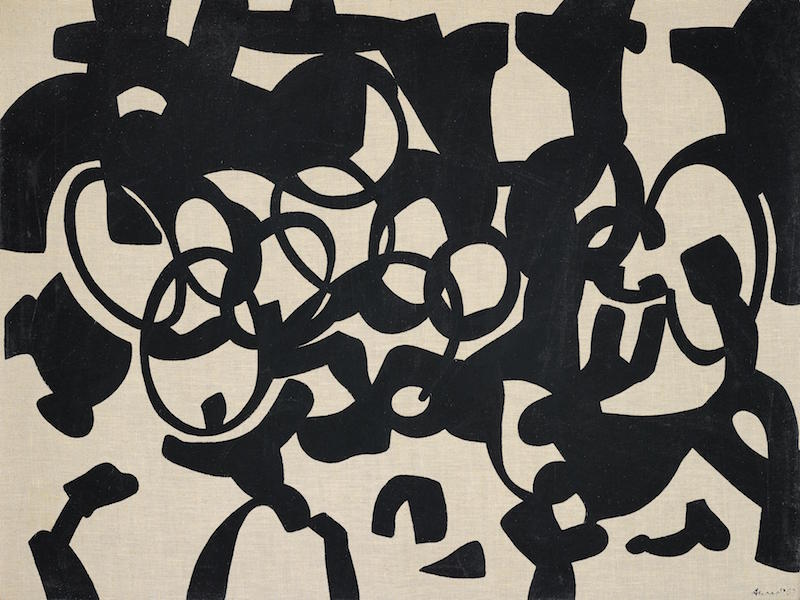
Born in Trapani in 1924, Carla Accardi passed away in Rome in 2014. In the early ’40s she attended the Academy of Fine Arts in Palermo and, for several months, the Academy of Fine Arts in Florence. In 1947 she made her first abstract painting and established the Gruppo Forma (Forma I is the name of the first and sole issue of the magazine-manifesto) together with Ugo Attardi, Pietro Consagra, Piero Dorazio, Mino Guerrini, Achille Perilli, Antonio Sanfilippo and Giulio Turcato. Until 1952 Carla Accardi’s work developed on concrete painting, a language that she discovered in Paris. Later on, starting from 1953, she started focusing on signs and colored “figures” that over the years evolved in sets of white and black segments, sometimes red. In the 1960s, Carla Accardi’s work encountered a stylistic change featuring the use of more vivid tones and new signs; in this period she started to create the first works on Sicofoil, a transparent plastic material that occupied the artist’s research in the following decade.
Her solo exhibitions were held in prestigious institutions such as: MUSMA, Matera (2013), Puglisi Foundation – Palazzo Valle, Catania (2011), Moscow Museum of Modern Art (2008), MACRO, Rome (2004), Musée d’Art Moderne de the Ville de Paris (2002), MOMA PS1, New York (2001), Museum of Contemporary Art – Castello di Rivoli and Kunstmuseum, Bonn (1998), Academy of France, Rome (1997), Kunstverein, Ludwigshafen am Rhein (1995), Galleria Civica, Modena (1989), Italian Institute of Culture, Madrid (1985), PAC, Milan (1983), Galleria d’Arte Contemporanea, Florence (1952). Among the most important group exhibitions in public and private institutions: MACTE, Termoli and Galleria d’Arte Moderna, Roma (2019), Museion, Bolzano (2018), Museo del Novecento, Milan (2017), Palazzo delle Esposizioni, Rome (2013, 2002), Palazzo Fortuny, Venice (2011), MAXXI, Rome (2010), Centre Pompidou, Paris (2009), MOCA, Los Angeles (2007), GAM, Turin (2003), Peggy Guggenheim Collection, Venice (2002), MOMA PS1, New York (1999), Galleria d’Arte Moderna, Bologna (1998), Guggenheim Museum, New York (1994), Royal Academy of Arts, London (1989), Palazzo Reale, Milan (1980), GNAM, Rome (1953).
Among the international exhibitions: Rome Quadriennale (2005, 1992, 1973, 1965, 1955), Venice Biennale (1993, 1988, 1978, 1976, 1964, 1948), Sao Paulo Biennial (1971). Her collaboration with Galleria Fumagalli began in 1993 with her own solo exhibition curated by Giovanni Maria Accame, who also wrote a text for the catalog. It continued in 1995 with the editing of a volume published during the exhibitions at the Kunstverein Ludwigshafen am Reim, at the Stadtische Galerie Wolfsburg and at the Italian Cultural Institute in Wolfsburg. In 1999 Edizioni Charta published the first catalogue raisonné of Carla Accardi which presented her artistic production from the beginning until 1997, curated by Germano Celant and with the support of Galleria Fumagalli; since 2000 the book is also available in English edition.
Biography
Born in Trapani in 1924, Carla Accardi passed away in Rome in 2014. In the early ’40s she attended the Academy of Fine Arts in Palermo and, for several months, the Academy of Fine Arts in Florence. In 1947 she made her first abstract painting and established the Gruppo Forma (Forma I is the name of the first and sole issue of the magazine-manifesto) together with Ugo Attardi, Pietro Consagra, Piero Dorazio, Mino Guerrini, Achille Perilli, Antonio Sanfilippo and Giulio Turcato. Until 1952 Carla Accardi’s work developed on concrete painting, a language that she discovered in Paris. Later on, starting from 1953, she started focusing on signs and colored “figures” that over the years evolved in sets of white and black segments, sometimes red. In the 1960s, Carla Accardi’s work encountered a stylistic change featuring the use of more vivid tones and new signs; in this period she started to create the first works on Sicofoil, a transparent plastic material that occupied the artist’s research in the following decade.
Her solo exhibitions were held in prestigious institutions such as: MUSMA, Matera (2013), Puglisi Foundation – Palazzo Valle, Catania (2011), Moscow Museum of Modern Art (2008), MACRO, Rome (2004), Musée d’Art Moderne de the Ville de Paris (2002), MOMA PS1, New York (2001), Museum of Contemporary Art – Castello di Rivoli and Kunstmuseum, Bonn (1998), Academy of France, Rome (1997), Kunstverein, Ludwigshafen am Rhein (1995), Galleria Civica, Modena (1989), Italian Institute of Culture, Madrid (1985), PAC, Milan (1983), Galleria d’Arte Contemporanea, Florence (1952). Among the most important group exhibitions in public and private institutions: MACTE, Termoli and Galleria d’Arte Moderna, Roma (2019), Museion, Bolzano (2018), Museo del Novecento, Milan (2017), Palazzo delle Esposizioni, Rome (2013, 2002), Palazzo Fortuny, Venice (2011), MAXXI, Rome (2010), Centre Pompidou, Paris (2009), MOCA, Los Angeles (2007), GAM, Turin (2003), Peggy Guggenheim Collection, Venice (2002), MOMA PS1, New York (1999), Galleria d’Arte Moderna, Bologna (1998), Guggenheim Museum, New York (1994), Royal Academy of Arts, London (1989), Palazzo Reale, Milan (1980), GNAM, Rome (1953).
Among the international exhibitions: Rome Quadriennale (2005, 1992, 1973, 1965, 1955), Venice Biennale (1993, 1988, 1978, 1976, 1964, 1948), Sao Paulo Biennial (1971). Her collaboration with Galleria Fumagalli began in 1993 with her own solo exhibition curated by Giovanni Maria Accame, who also wrote a text for the catalog. It continued in 1995 with the editing of a volume published during the exhibitions at the Kunstverein Ludwigshafen am Reim, at the Stadtische Galerie Wolfsburg and at the Italian Cultural Institute in Wolfsburg. In 1999 Edizioni Charta published the first catalogue raisonné of Carla Accardi which presented her artistic production from the beginning until 1997, curated by Germano Celant and with the support of Galleria Fumagalli; since 2000 the book is also available in English edition.
Exhibitions
SOLO EXHIBITIONS
GROUP EXHIBITIONS
Exhibitions
SOLO EXHIBITIONS
GROUP EXHIBITIONS



Es kann schwierig sein, Ihre Verluste in einem Casino
zurückzubekommen, egal ob online oder offline. Alle anderen Anbieter
wie Wunderino oder Pokerstars müssen Spielverluste von österreichischen Spielern refundieren. Ja, von Pokerstars und allen anderen Anbietern aus dem Ausland kann
man die gesamte Fülle seiner Casino-Verluste zurückfordern (Österreich).
Sie können mit solch einem spezialisierten Rechtsanwalt also einfach Ihr Glück versuchen und haben dabei absolut kein Risiko bei den erforderlichen Schritten.
Aus diesem Grund habe ich mich Ihrer Sammelklage angeschlossen. Wir zeigen Ihnen Möglichkeiten, wie Sie ohne Kostenrisiko und mit besten Erfolgsaussichten Ihre Verluste zurückerhalten. Prüfen Sie jetzt, ob Sie berechtigt sind
Ihr verlorenes Geld vom Online Casino zurückfordern können. Verluste aus
Glücksspielen im Online Casino können Sie einfach und schnell zurückfordern.
Online Glücksspiel ist in manchen Ländern illegal.
References:
https://online-spielhallen.de/zet-casino-deutschland-eine-umfassende-bewertung-fur-spieler/
Ich hatte Zugriff auf meine Lieblingsspiele, konnte Einzahlungen vornehmen und die Bonusangebote nutzen. Das WSM Casino bietet keine
native App für iOS und Android an. Das WSM Live Casino bietet eine Auswahl an beliebten Casinoklassikern von den Software-Anbietern Evolution, Betgames TV, Onetouch und Bombay Live.
Es überraschte mich, dass es keine Kategorie für Tischspiele gibt.
Die Spieleauswahl enthält Games der Kategorien Slots, Live-Games,
Crypto-Games und Crash-Spiele.
Die Website von WSM Casino ist vollständig für mobile Endgeräte optimiert
– egal ob Smartphone oder Tablet. Nach der Registrierung und einer ersten Einzahlung ab 30 € erhalten neue Spieler automatisch einen 100 %-Bonus bis zu 500 € sowie Freispiele.
Dazu gehören klassische Slots, Tischspiele wie Roulette, Blackjack, Baccarat und Poker sowie ein Live-Casino mit professionellen Dealern. In dieser Version des Pokers spielt man live gegen einen Dealer – nicht gegen andere Spieler.Zu den angebotenen Formaten zählen unter anderem Ultimate Texas Hold’em
und Casino Hold’em. Alle Spiele sind sowohl in der Desktop- als auch in der mobilen Version verfügbar.
Stand April 2025 bietet die Plattform über 3.000 Spiele – von klassischen Slots bis hin zu Live-Dealer-Spielen.
References:
https://online-spielhallen.de/powerup-casino-freispiele-ihr-schlussel-zum-sieg/
Select ‘Change’ for the details you’d like to update and follow the on-screen instructions.
Select ‘Account services’ and then ‘Business contact details’.
With Dual control, two or more authorised users are required to
approve payments and create new secondary users. You can also download
them as PDFs to save on your device for when you need them.
Simply log on to the app, choose the account,
then quickly and easily scan cheques up to £5,000 a day and
£2,000 per cheque. Once set up, just tap on the ‘Digital Security Device’ option from the main app screen to generate
secure codes for logging on to Business Internet Banking.
Log on to access your accounts whenever you want, wherever you are.
Online banking is quick, convenient and secure. The campaign upset members of Britain’s Japanese community who claimed the
man’s skin tone was darkened and makeup was applied to narrow
his eyes. Along with Barclays Bank, HSBC UK
Bank plc owns 50% of Vaultex UK Limited, a bulk cash processing
company and member of the Bank of England’s Note Circulation Scheme, which handles all bulk cash processing for both banks.
It now offers internet banking as well and serves more than 1.7 million customers.
References:
https://blackcoin.co/top-slots-the-ultimate-guide/
New players receive a generous welcome bonus after
signing up. RocketPlay Casino Bonus offers exciting
rewards for both new and regular players. New players get a welcome bonus,
while regular players enjoy free spins, cashback, and
VIP rewards. The casino also offers generous bonuses and promotions.
You can access exciting games, big bonuses, and secure
payments in just a few steps.
The platform automatically adapts to any screen size, ensuring optimal performance whether players
are using smartphones, tablets, or desktop computers.
Players earn points through regular gameplay, which can be redeemed
for cashback, exclusive bonuses, and special privileges.
The live blackjack and roulette tables are particularly popular, offering
multiple betting limits to accommodate both casual players and
high rollers. Designed specifically with
Canadian players in mind, the platform supports CAD transactions
alongside six major cryptocurrencies, making it accessible to both traditional and crypto-savvy players.
References:
https://blackcoin.co/nine-casino-premium-gaming-destination-for-australia/
paypal casinos for usa players
References:
https://www.konqisakaxgy.shop/
online betting with paypal winnersbet
References:
https://chairrocka.com/employer/top-10-online-casino-real-money-sites-in-the-usa-for-2025/
online roulette paypal
References:
https://popijob.com/employer/paypal-casinos-best-online-casinos-that-accept-paypal/
best online casino usa paypal
References:
https://www.advertiseajob.co.uk/employer/best-online-casinos-that-accept-paypal-in-2025/
online slots paypal
References:
https://www.cbl.health/employer/top-paying-online-casino-in-nz-best-payout-casinos-for-2025/
casino paypal
References:
https://sengym.kr/bbs/board.php?bo_table=free&wr_id=23255
Thank you, I have recently been looking for information about this subject for a while and yours is the greatest I have came upon till now. However, what about the conclusion? Are you positive concerning the supply?
Good information. Lucky me I ran across your site by chance (stumbleupon). I’ve bookmarked it for later!
Hurrah, that’s what I was searching for, what a information! present here at this website, thanks admin of this site.
Wow, that’s what I was looking for, what a stuff! existing here at this website, thanks admin of this website.
Wow, that’s what I was exploring for, what a information! existing here at this webpage, thanks admin of this web site.
Hurrah, that’s what I was exploring for, what a stuff! present here at this blog, thanks admin of this web site.
Wow, that’s what I was exploring for, what a data! existing here at this webpage, thanks admin of this web site.
Wow, that’s what I was looking for, what a data! existing here at this weblog, thanks admin of this site.
Hurrah, that’s what I was exploring for, what a data! present here at this blog, thanks admin of this site.
Wow, that’s what I was looking for, what a data! existing here at this webpage, thanks admin of this site.
Wow, that’s what I was searching for, what a material! existing here at this web site, thanks admin of this site.
Hurrah, that’s what I was searching for, what a data! existing here at this webpage, thanks admin of this site.
Wow, that’s what I was seeking for, what a information! present here at this website, thanks admin of this web page.
After I originally left a comment I appear to have clicked the -Notify me when new comments are added- checkbox and now each time a comment is added I receive 4 emails with the same comment. There has to be an easy method you can remove me from that service? Kudos!
After I originally commented I seem to have clicked on the -Notify me when new comments are added- checkbox and now each time a comment is added I get 4 emails with the exact same comment. Is there a means you are able to remove me from that service? Kudos!
When I initially left a comment I appear to have clicked the -Notify me when new comments are added- checkbox and from now on whenever a comment is added I receive four emails with the exact same comment. Perhaps there is an easy method you are able to remove me from that service? Thanks a lot!
When I initially commented I appear to have clicked the -Notify me when new comments are added- checkbox and now whenever a comment is added I receive 4 emails with the exact same comment. Is there a way you are able to remove me from that service? Thanks a lot!
When I originally left a comment I seem to have clicked on the -Notify me when new comments are added- checkbox and now each time a comment is added I receive 4 emails with the same comment. Perhaps there is an easy method you can remove me from that service? Many thanks!
av 在线 – https://kanav.so
You could definitely see your enthusiasm within the article you write. The arena hopes for even more passionate writers such as you who aren’t afraid to say how they believe. All the time go after your heart.
I want to to thank you for this good read!! I certainly loved every bit of it. I’ve got you saved as a favorite to look at new stuff you post…
Hello my loved one! I wish to say that this post is amazing, nice written and include approximately all vital infos. I’d like to look extra posts like this .
Thanks for any other excellent post. Where else could anybody get that type of information in such a perfect means of writing? I’ve a presentation next week, and I am on the look for such information.
Thanks in favor of sharing such a pleasant opinion, piece of writing is fastidious, thats why i have read it entirely
My brother recommended I might like this web site. He was entirely right. This put up truly made my day. You can not consider simply how a lot time I had spent for this info! Thank you!
Wow that was strange. I just wrote an very long comment but after I clicked submit my comment didn’t show up. Grrrr… well I’m not writing all that over again. Anyway, just wanted to say superb blog!
If you are going for finest contents like me, just pay a quick visit this website every day as it presents quality contents, thanks
This is my first time pay a quick visit at here and i am truly impressed to read all at alone place.
Exceptional post however , I was wanting to know if you could write a litte more on this topic? I’d be very grateful if you could elaborate a little bit further. Thank you!
guy smith heating https://otvetnow.ru vehicle financing options
I couldn’t refrain from commenting. Exceptionally well written!
We are a group of volunteers and starting a new scheme in our community. Your website offered us with valuable info to work on. You’ve done a formidable job and our whole community will be thankful to you.
Hmm it appears like your website ate my first comment (it was extremely long) so I guess I’ll just sum it up what I submitted and say, I’m thoroughly enjoying your blog. I as well am an aspiring blog blogger but I’m still new to everything. Do you have any points for rookie blog writers? I’d really appreciate it.
Great site. A lot of helpful information here. I’m sending it to several pals ans additionally sharing in delicious. And naturally, thank you to your sweat!
I’m not that much of a online reader to be honest but your sites really nice, keep it up! I’ll go ahead and bookmark your site to come back in the future. All the best
I am really grateful to the holder of this site who has shared this fantastic article at here.
Howdy! This post could not be written any better! Reading through this post reminds me of my old room mate! He always kept talking about this. I will forward this write-up to him. Fairly certain he will have a good read. Thanks for sharing!
It is not my first time to pay a visit this website, i am browsing this web page dailly and take pleasant facts from here everyday.
Hey there! I could have sworn I’ve been to this blog before but after checking through some of the post I realized it’s new to me. Anyways, I’m definitely glad I found it and I’ll be book-marking and checking back frequently!
Heya i am for the first time here. I came across this board and I find It truly useful & it helped me out a lot. I hope to give something back and aid others like you aided me.
Hello There. I found your blog using msn. This is a very well written article. I’ll make sure to bookmark it and return to read more of your useful information. Thanks for the post. I will definitely return.
you’re in reality a excellent webmaster. The site loading pace is incredible. It seems that you’re doing any unique trick. Moreover, The contents are masterpiece. you’ve done a great process in this matter!
Hi there! I just wanted to ask if you ever have any issues with hackers? My last blog (wordpress) was hacked and I ended up losing several weeks of hard work due to no data backup. Do you have any methods to prevent hackers?
You’re so interesting! I don’t think I’ve truly read through something like this before. So great to discover another person with a few genuine thoughts on this subject. Seriously.. thank you for starting this up. This site is one thing that is required on the internet, someone with some originality!
I loved as much as you will receive carried out right here. The sketch is tasteful, your authored material stylish. nonetheless, you command get got an edginess over that you wish be delivering the following. unwell unquestionably come more formerly again since exactly the same nearly very often inside case you shield this hike.
If some one needs to be updated with hottest technologies after that he must be go to see this site and be up to date everyday.
Good day! This is my 1st comment here so I just wanted to give a quick shout out and tell you I really enjoy reading your blog posts. Can you suggest any other blogs/websites/forums that cover the same topics? Many thanks!
Hello protectors of indoor air quality !
Many dog and cat owners suffer from allergic reactions to their pets, which is why finding the best air purifier for pet allergies is non-negotiable. bestairpurifierforpets.vercel.app. Specialized purifiers can drastically reduce airborne allergens, providing relief to sensitive individuals. With regular use, these devices can enhance your quality of life at home.
To ensure optimal performance, the best rated air purifier for pets may feature a built-in air quality indicator. This function allows users to monitor the air quality in real-time and adjust the unit’s settings accordingly. Keeping track of air conditions creates a proactive approach to maintaining wellness at home.
BestAirPurifierForPets.Vercel.App: Your Source for Pet-Friendly Air – п»їhttps://bestairpurifierforpets.vercel.app/
May you enjoy incredible experiences of cleaner living !
I’m not that much of a internet reader to be honest but your sites really nice, keep it up! I’ll go ahead and bookmark your site to come back down the road. Many thanks
I was very pleased to uncover this website. I wanted to thank you for ones time just for this wonderful read!! I definitely really liked every bit of it and i also have you book-marked to look at new things in your site.
ac online casino
References:
https://www.personaltrainerdr.com/portfolio/the-fencer/folio8-1/
how long does it take for winstrol to work
References:
https://pad.stuve.de/s/oOEV33wLU
Generally I do not learn article on blogs, however I would like to say that this write-up very pressured me to check out and do so! Your writing style has been surprised me. Thanks, very great article.
how long does steroid withdrawal last
References:
https://gaiaathome.eu/gaiaathome/show_user.php?userid=1871914
red 7 casino
References:
https://buscandolaverdad.es/2023/11/15/las-predicciones-de-the-economist-the-world-ahead-2024/
It’s really very complex in this busy life to listen news on Television, so I simply use internet for that purpose, and take the newest information.
This piece of writing will assist the internet users for setting up new web site or even a blog from start to end.
What i don’t understood is if truth be told how you’re not actually a lot more smartly-appreciated than you may be now. You are very intelligent. You already know therefore considerably when it comes to this topic, made me personally imagine it from numerous varied angles. Its like men and women aren’t interested unless it is one thing to accomplish with Woman gaga! Your individual stuffs outstanding. At all times take care of it up!